API-First Development: How It Is Transforming Web Applications in 2026


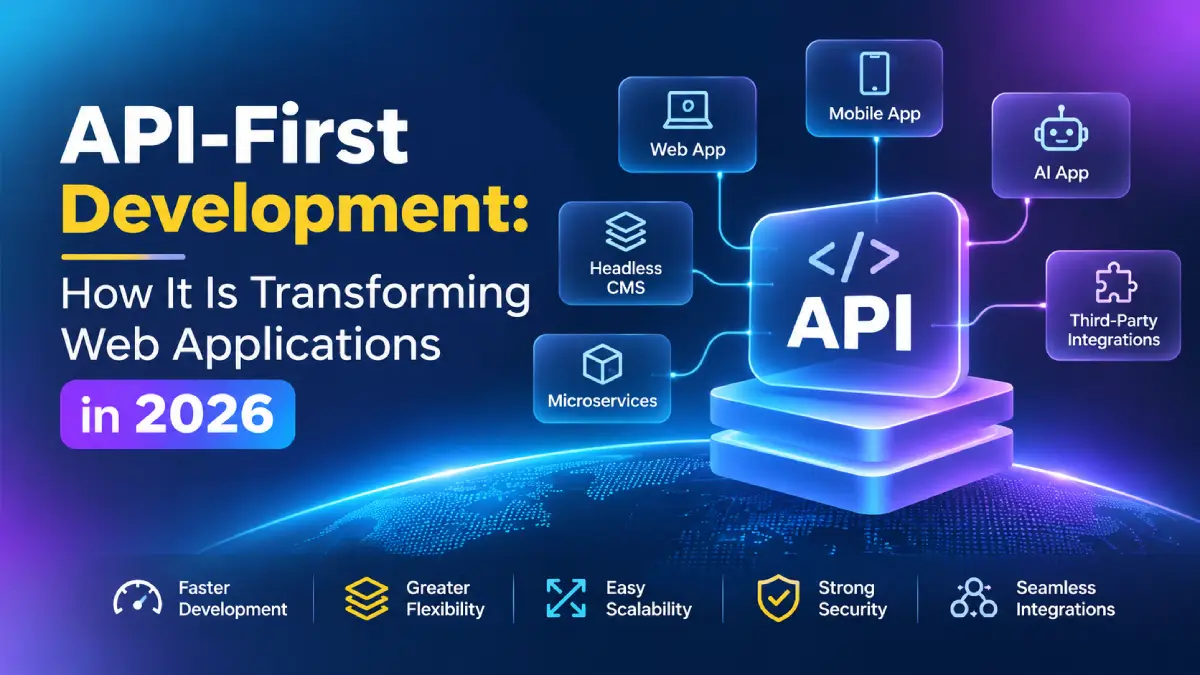
Modern applications are now a lot about flexibility in their functionality. It is barely made for one task. Like, an e-commerce website needs not just a product catalogue but also needs to maintain the inventory, payment flows, customer accounts, delivery details, etc.
If you try to build each and every functionality separately, it will take a lot of effort, consume time, and also increase the cost.
That is why a clear solution is API-first development. It makes application interfaces a priority when the development process starts.
This approach has become particularly of interest to businesses as they lean towards more of a connected digital experience. As we move through 2026, API-first development is influencing how teams design, build, integrate, and maintain web applications.
Table Of Contents
| 1. | Introduction |
| 2. | What Is API-First Development? |
| 3. | Why Is API-First Development Important in 2026 |
| 4. | 5 Key Trends Transforming Web Applications Through API-First Developement |
| 5. | Conclusion |
| 6. | FAQ |
| 7. | Planning to build a scalable, connected web application? |
What Is API-First Development?
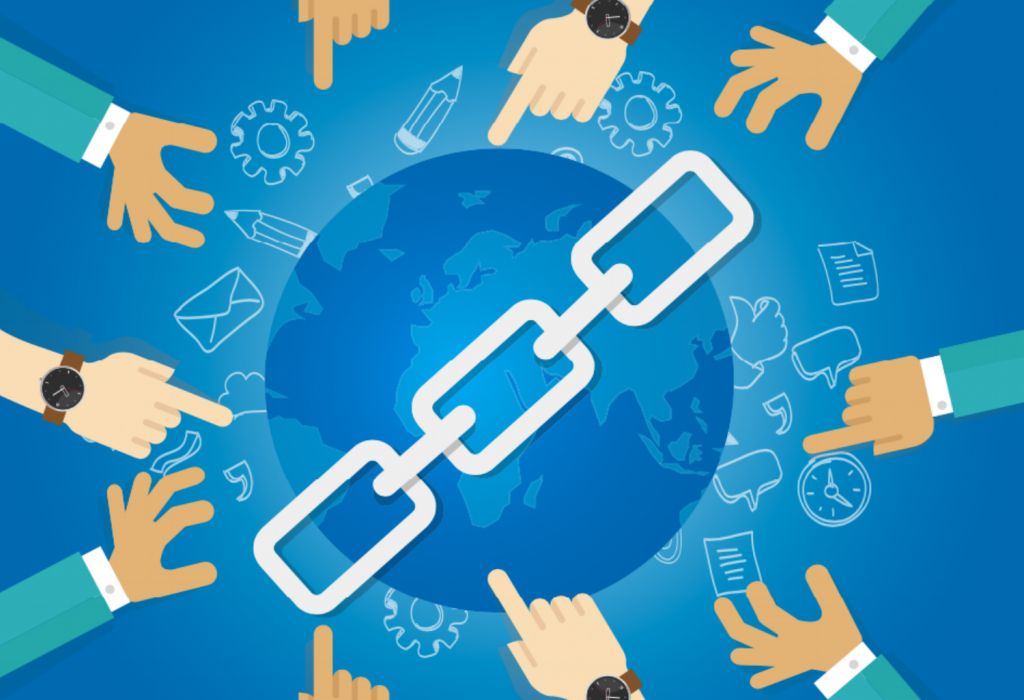
API first development is a software development approach where developers create the application programming interface, or API, before building the system that is going to use it.
An API acts as a communication interface between software components. It defines how one system can request data, access functionality, or exchange information with another system.
Postman’s 2025 State of the API report found that 82% of surveyed organizations had adopted API-first practices to some degree, while 25% described themselves as fully API-first.
For example, an online retailer might define APIs for retrieving product information, checking inventory, processing orders, and accessing customer accounts before developing its storefront.
Why Is API-First Development Important in 2026
Web applications depend on connected interfaces, multiple services, and business requirements that keep evolving with time. If an application is designed around a single webpage, it becomes difficult for businesses to maintain multiple channels and services.
API-first architecture can help this by planning a way for these requirements.
Businesses need flexibility
Companies may want to launch new customer-facing interfaces without rebuilding the business logic that already supports their existing applications.
Software ecosystems are becoming more connected
Payment providers, analytics platforms, customer relationship management systems, inventory services, and third-party applications often need to exchange information.
AI is changing software interaction with services
AI-powered applications and agents can use APIs to retrieve information or perform authorized operations. This creates new requirements for documentation, access controls, predictable responses, and secure execution.
5 Key Trends Transforming Web Applications Through API-First Developement
1. API-First Architecture Is Supporting Omnichannel Experiences
Businesses no longer need to deliver every digital experience through a single website. Customers may discover a product through a mobile app, check its availability on a website, and complete a purchase through another supported channel.
When each interface depends on separate implementations of the same business logic, maintaining consistency becomes more difficult.
API-first architecture allows teams to expose shared capabilities through defined interfaces. Different applications can then access the same underlying services while presenting information in ways suited to their users.
2. API Contracts Are Helping Development Teams Work in Parallel
One of the practical advantages of API-first development is that it changes how frontend and backend teams coordinate their work.
In tight workflows, frontend developers may need to wait until backend endpoints are implemented before they can fully integrate their interfaces. Changes to data structures or response formats can also create unexpected rework.
API-first development helps address these issues by defining the expected interface before implementation is complete.
Teams can agree on API contracts, document expected responses, and create mock services for development and testing. Frontend developers can build against these agreed responses while backend developers implement the actual services.
3. AI-Powered Applications Are Creating New API Requirements
AI is changing the types of applications developers build and the ways those applications interact with existing systems.
An AI-powered customer support application might retrieve order information, check delivery status, or initiate an authorized workflow. Rather than relying on a human to navigate every screen, the AI system can use appropriate APIs to request information and trigger supported operations.
Postman’s 2025 State of the API report found that although 89% of surveyed developers used AI, only 24% reported actively designing APIs with AI agents in mind. This highlights a gap between the adoption of AI development tools and the preparation of APIs for machine consumers.
4. REST API and GraphQL API Strategies Are Evolving With Application Needs
API-first development does not require teams to choose one universal API technology. Instead, it encourages them to select interfaces according to the needs of the applications that will consume them.
REST and GraphQL are two widely used approaches, each suited to different requirements.
REST API: A Resource-Oriented Approach
A REST API commonly exposes resources through HTTP endpoints. An e-commerce application, for example, might provide endpoints for retrieving products, checking inventory, or accessing orders.
REST is often a practical choice when an application needs clearly defined resources, familiar HTTP conventions, and straightforward integrations.
It can also work well with established HTTP caching patterns and a wide range of development tools.
However, applications that need data from multiple related resources may require several requests or additional endpoints tailored to specific use cases.
GraphQL API: Flexible Data Queries
GraphQL allows clients to request specific fields from a defined data schema. Instead of relying entirely on fixed response structures, a client can specify the information it needs for a particular operation.
For example, a product listing might require a product’s name, price, image, and availability. A product detail page might need those fields plus descriptions, reviews, and related items.
A GraphQL API can allow these interfaces to request different combinations of fields through the same schema.
This flexibility can be useful for applications with varied data requirements, but it introduces its own considerations, including query complexity, caching strategies, authorization, and performance monitoring. GraphQL is not automatically faster or more efficient than REST.
The official GraphQL documentation explains how clients select fields and traverse related objects when requesting data.
5. Headless CMS Architecture Is Making Content More Flexible
Traditional content management systems often combine content management with the presentation layer that renders webpages. This can be convenient when a business primarily needs one website.
A headless CMS separates content management from the frontend. Content is managed centrally and delivered through APIs to applications that decide how to display it.
This architecture fits naturally with API-first thinking because content delivery becomes an interface that different applications can consume.
Conclusion
API-first architecture will not be necessary for every project, nor will it remove the challenges of software development. But for businesses building complex, connected, and extensible web applications, it provides a structured way to plan for change.
The opportunity in 2026 is to build applications around well-designed interfaces that support today’s requirements while leaving room for tomorrow’s integrations.
FAQ:
API-first development is an approach where APIs are designed and defined before the applications that use them are built.
It improves flexibility, supports parallel development, simplifies integrations, and enables businesses to reuse functionality across multiple applications.
Well-designed APIs allow AI-powered applications and agents to retrieve data, access services, and perform authorized actions through defined interfaces.
REST uses resource-based endpoints with predefined response structures, while GraphQL lets clients request specific fields from a defined data schema.
A headless CMS delivers content through APIs, allowing websites, mobile apps, and other digital platforms to use the same content with different presentation layers.
Planning to build a scalable, connected web application?
An API-first approach can help you create a flexible architecture that supports new integrations, multiple digital channels, and evolving business requirements.
Partner with iB Arts to build API-driven web applications designed for performance, flexibility, and long-term growth.